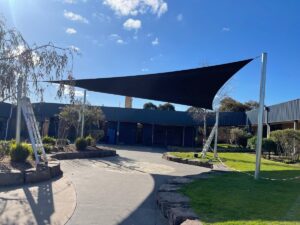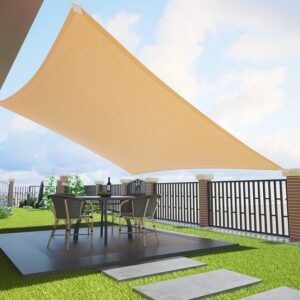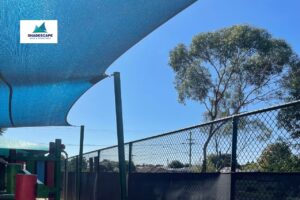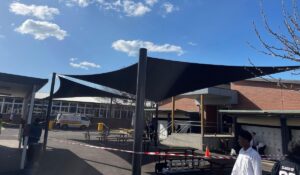
Shade sails look simple: a piece of fabric stretched across posts. But when they’re installed permanently, there’s more going on than most people realize. Before a shade sail goes up, you need to understand why engineering matters, what makes a shade sail safe, and how to get it right the first time.
At Shadescape, we design and install shade sails that not only look great but are built to last, meet Australian standards, and keep people safe underneath them.
What Does “Engineering” Mean for Shade Sails?
When we talk about engineering, we mean careful planning and design by a trained professional, usually an engineer who checks that a shade sail is safe and strong enough for your site.
Permanent shade sails are under constant force from:
- Wind
- Tension from the fabric
- Weight on the posts
- Movement of people underneath
Engineering considers all of these so the structure won’t sag, twist, or collapse.
Simply put: Engineering makes sure the shade sail stays safe and solid in real conditions — not just in pictures.
Why Permanent Shade Sails Always Need Engineering
Some small shade sails used temporarily might not need engineering. But once a sail is fixed into the ground, exposed to wind, or used around people, engineering becomes essential.
Here’s why:
1. Safety Comes First (WHS Rules)
Your shade sail must follow Work Health and Safety (WHS) rules. These exist to protect people from harm. Without proper engineering:
- Posts can lean or fail
- Fabric can tear at high wind
- Fixings can pull from the ground
Engineers calculate the right size and strength needed so the structure stays safe.
2. Local Standards and Compliance Matter
In Australia, permanent shade sails are expected to meet certain standards:
- AS/NZS 1170: This is the code that engineers use to calculate wind loads and how posts and fabric must be designed.
- Local councils often require engineering drawings before issuing permits.
These standards are not suggestions, they are what make your shade sail reliable for years.
3. Engineering Protects You and Your Property
When your contractor uses an engineer who is registered with the National Engineering Register (NER), it means:
- You get the correct build design
- You receive a copy of engineering drawings
- You get an engineering certificate to keep
This documentation protects you if there is a future issue and is often needed for:
- Insurance claims
- Council approval
- Asset records
4. Bigger Sails Need Better Design
Large shade sails, especially over areas like:
- Sports courts
- Playgrounds
- Commercial outdoor dining
- Car parks
need special engineering because they span wide areas and experience stronger loads.
Smaller backyard sails are easier, but if they are permanent and high, engineering is still best practice.
What Happens Without Engineering? (Risks You Should Know)
If you install a permanent shade sail without proper engineering:
- The posts may sink or lean.
- The sail can sag, leaving gaps or poor coverage.
- Sudden winds can stress the fabric or fixings.
- You may fail a council inspection or warranty review.
- Insurance claims can be denied if no engineer documentation exists.
How Engineering Actually Works — In Simple Terms
An engineer looks at:
- Wind pressure at your exact location
(Different areas of Australia have different wind speeds.) - Soil type
(Clay soil holds posts differently than sandy soil.) - Fabric tension
(How tight the fabric pulls on posts.) - Post spacing and size
(This affects stability and strength.) - Footing depth
(How deep the concrete goes below ground.)
After assessment, you get:
- Engineering drawings
- Dimensions for posts and footings
- Wind load calculations
- Certificate of compliance
Sports Courts: What’s the Best Shade Option?
If you’re asking:
“What’s the best option for covering my sports court?”
Here are the most practical, long-lasting choices:
1. Engineered Large Span Fabric Structures
These are the most common choices for sports courts. They offer:
- Wide coverage without internal posts
- Strong wind resistance
- UV and waterproof fabric options
- Designed specifically for sporting use
This type works well for:
- Tennis courts
- Basketball courts
- Netball courts
- Multi-purpose courts
They look clean, provide great shade, and comply with safety standards.
See our Commercial Shade Solutions for examples.
2. Cantilever Shade Structures
Cantilever structures have posts only on one side, leaving the play area free from obstacles. Benefits:
- No centre posts interrupting play
- Excellent for large recreational spaces
- Can use fabric or metal roofs
This is ideal when posts in the middle would interfere with sports.
3. Steel Roof Shade Options
For complete weather protection (sun + rain), a steel roof structure can be used. These are:
- Heavier and more durable
- Fully waterproof
- Lower maintenance long term
However, they can trap heat if not ventilated properly, so design is key.
Are There Any Shade Sails That Don’t Need Engineering?
Yes but only in very limited cases:
- Small, temporary shade sails
- Sails with removable poles
- Shade sails not installed into permanent footings
- Sails in areas with very low wind exposure
Even in these situations, it’s wise to get a basic design review.
For all permanent, fixed shade sails, engineering is recommended and often required.
Why Working with Shadescape Matters
At Shadescape, we provide:
- Professional site assessment
- Engineering support with NER-registered engineers
- Full documentation for council and compliance
- Safe installation and tensioning
- Long-lasting shade solutions
We tailor designs so they suit your exact space, whether it’s a backyard, a sports court, or a large commercial area.
Learn more about our process on our Shade Sail Engineering & Installation page.
Frequently Asked Questions
1. Do shade sails always require engineering in Australia?
In most cases, yes. Any permanent shade sail, especially those with steel posts, installed over people, or larger than a small patio, should be engineered to meet Australian safety and wind load standards.
2. How long do engineered shade sails last?
With proper installation and fabric, a well-engineered shade sail can last 7–15 years or more. Waterproof materials and high-quality hardware can extend this even further.
3. What’s the difference between WHS compliance and engineering?
Engineering ensures the shade sail is structurally sound. WHS compliance means the installation meets safety requirements so people underneath are protected (no sharp edges, collapse risk, or falling fixings). Both are necessary for public and commercial installations.
Ready to Get the Right Shade Solution?
Don’t risk your shade sail with guesswork or weak installations.
Contact Shadescape today for a professional site assessment, engineered design, and long-lasting shade solution built for Australian conditions.