Permanent shade structures play a vital role in creating usable, comfortable outdoor environments. Whether the space is a residential backyard, a school playground, a commercial car park, or a public precinct, choosing the right shade solution affects comfort, durability, safety, and long-term value.
This guide explores the types of permanent shade structures available today, explaining how each works, where it performs best, what materials are used, and what to expect in terms of durability and cost. The goal is to help property owners, businesses, and councils make informed decisions based on real-world performance, not marketing claims.
At Shadescape Sails & Structures, permanent shade solutions are designed and installed across Victoria and Australia, with a focus on engineering, compliance, and long-term reliability. This guide reflects that practical, experience-led approach.
What Are Permanent Shade Structures?
Permanent shade structures are fixed outdoor shading systems engineered to remain in place year-round. Unlike temporary umbrellas or removable awnings, these structures are designed to withstand wind, UV exposure, and changing weather conditions over many years.
Permanent shade structures are commonly used in:
- Residential outdoor living areas
- Schools and childcare centres
- Commercial and hospitality spaces
- Car parks and pedestrian areas
- Sports, recreation, and public facilities
1. Shade Sail Structures
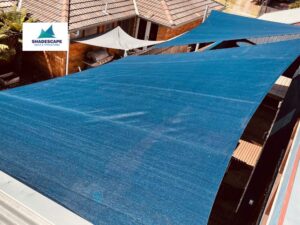
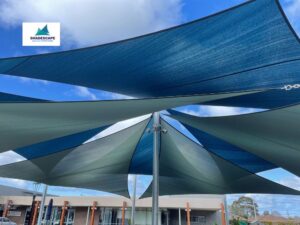
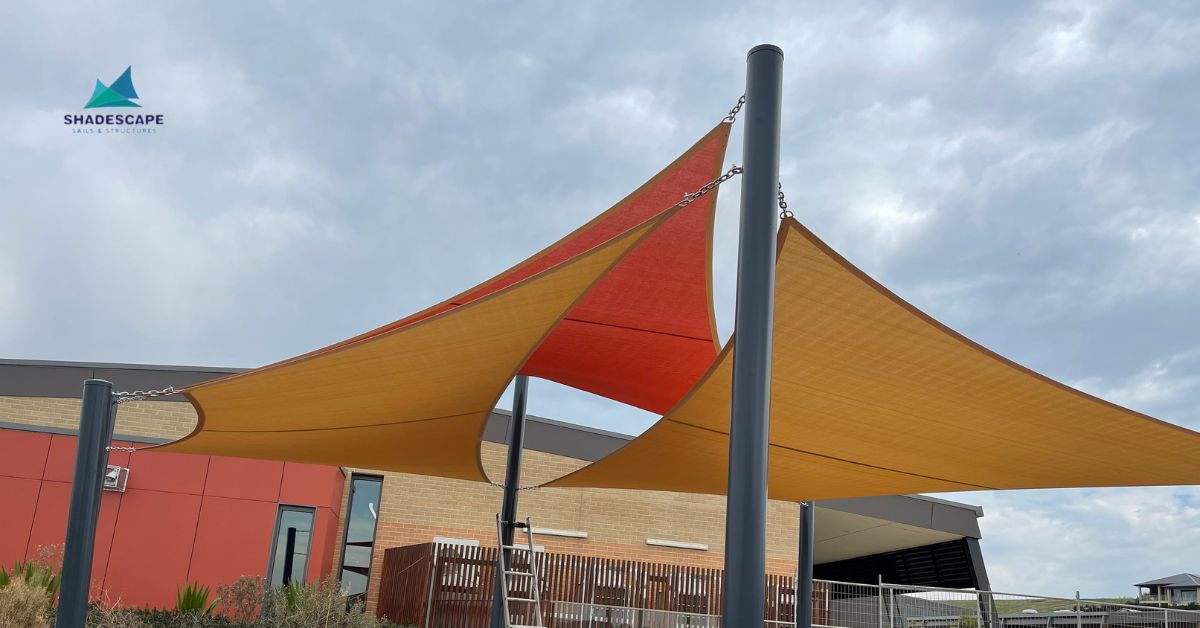
Shade sail structures are tensioned fabric systems supported by steel posts or existing structural fixings. They are one of the most versatile and visually appealing fabric shade structures available.
Materials:
High-density polyethylene (HDPE) mesh or waterproof PVC membrane
Durability:
Typically 7–15 years depending on fabric type and exposure
Pros:
- Excellent UV protection
- Modern, lightweight appearance
- Flexible design options
- Allows airflow (HDPE)
Considerations:
- Waterproof versions require precise slope and engineering
- Not ideal for very large uninterrupted spans
Shade sails are commonly used in residential patios, playgrounds, pools, and outdoor learning spaces.
2. Umbrella (Star) Shade Structures
Umbrella or star structures are single-column systems with a fabric canopy extending outward, making them ideal where ground space is limited.
Materials:
Steel column with tensioned fabric canopy
Durability:
10–15 years with proper maintenance
Pros:
- Minimal posts
- Clear, open space underneath
- Suitable for seating and gathering areas
Considerations:
- Limited coverage compared to multi-post systems
- Higher cost per square metre than sails
These structures are often used in schools, cafés, courtyards, and poolside areas.
3. Large Span Fabric Shade Structures
Large span shade structures are designed to cover wide areas using engineered fabric membranes supported by steel frames.
Materials:
PVC-coated tensile fabric with structural steel
Durability:
15–25 years
Pros:
- Ideal for large areas such as sports courts or car parks
- Can be fully waterproof
- Highly engineered and wind-rated
Considerations:
- Higher upfront cost
- Requires council approvals and engineering documentation
These systems are commonly selected for commercial shade structures where scale and compliance are critical.
4. Hip and Ridge Shade Structures
Hip and ridge structures use a peaked roof-style fabric supported by steel framing. They offer strong visual symmetry and efficient water runoff.
Materials:
Fabric membrane with steel frame
Durability:
15–20 years
Pros:
- Cost-effective for larger covered areas
- Suitable for playgrounds and assembly areas
- Good rain management
Considerations:
- Less flexible in shape compared to sails
- More visible structural framing
5. Steel Shade Structures
Steel shade structures feature solid or semi-solid roofing supported by steel posts. These are among the most durable permanent shade options available.
Materials:
Structural steel with metal roofing
Durability:
25+ years with appropriate coatings
Pros:
- Extremely durable
- Fully waterproof
- Low maintenance
Considerations:
- Heavier visual presence
- Higher material and installation cost
Steel structures are commonly used for car parks, public walkways, and long-term infrastructure projects.
6. Cantilever Shade Structures
Cantilever shade structures are supported from one side only, allowing for clear space beneath the canopy.
Materials:
Steel frame with fabric or metal roof
Durability:
15–25 years
Pros:
- No internal posts
- Excellent vehicle and pedestrian access
- Ideal for car parks and drive-throughs
Considerations:
- Requires precise engineering
- Typically higher cost
7. Multi-Panel Shade Structures
Multi-panel systems combine multiple fabric or roof elements into a modular design, offering architectural interest and scalability.
Materials:
Fabric membranes or steel roofing with modular framing
Durability:
Varies by material (15–30 years)
Pros:
- Strong visual impact
- Flexible coverage
- Suitable for large public spaces
Considerations:
- More complex installation
- Higher design and engineering input
8. Custom Shade Structures
Custom shade structures are designed specifically for unique site conditions, architectural requirements, or branding objectives.
Materials:
Combination of fabric, steel, and bespoke components
Durability:
Project-specific
Pros:
- Tailored to site and usage
- Integrates with architecture
- Maximises usable space
Considerations:
- Higher design investment
- Longer planning phase
Shadescape specialises in custom-engineered shade solutions designed for compliance, longevity, and performance.
Choosing the Right Permanent Shade Solution
When selecting from the different shade structure designs, it’s important to consider:
- Intended use and traffic levels
- UV and weather exposure
- Required lifespan
- Maintenance expectations
- Council and compliance requirements
Professional site assessment ensures the chosen structure performs as intended over time.
Why Work With Shadescape?
Shadescape designs and installs permanent outdoor shade solutions across residential, commercial, and public environments throughout Australia. Every project is engineered to meet Australian standards and site-specific conditions.
From shade sail structures to large-scale commercial shade structures, the focus remains the same: safe design, durable materials, and long-term performance.
Ready to Plan Your Permanent Shade Structure?
If you’re considering a permanent shade solution for your property, now is the time to get clear, honest advice.
Contact Shadescape today to book a professional site assessment and explore the most suitable permanent shade structure for your space.