
A pool should be the best part of a Melbourne summer. But a sun-baked pool deck, warm water, and surface debris can make it hard to enjoy. That is why shade sails for swimming pools are now one of the most popular upgrades for homes, apartment complexes, schools, and hotels.
The question we hear most is simple: should you choose a sail or a pergola? This guide answers it in plain English. We explain how each option works over and around water, what pool barrier rules mean for post positions, which fabric to choose, and when a pergola is the better pick. If you manage a shared pool, start with the commercial section. If you own a backyard pool, go straight to the homeowner section.
The Short Answer
For most pools, a custom-designed shade sail is the better value. These sails can be tailored to follow the sun, keep posts away from the pool edge, and usually cost less than a solid roof. A pergola is the better choice when you want a permanent roof over seating, dining, or an outdoor kitchen.
Many homes use both. The right answer depends on your pool, your barrier, and your site, so a site visit is the only way to be sure.
Why Shade Matters Around a Pool
Shade does more than make the pool area look good. A well-planned shade sail over a pool or pool deck can help in several practical ways:
- Sun protection. Shade reduces direct UV exposure for swimmers and for people resting beside the pool. It does not replace sunscreen, but it helps.
- A cooler deck. Pavers and concrete get very hot in summer. Shade makes it easier to walk and sit around the pool.
- Cooler water, in many cases. Less direct sun on the water can help it stay cooler. The result depends on how much of the pool you cover.
- Less chlorine loss. Strong sunlight breaks down chlorine. Shade can help your pool chemistry stay more stable.
- Fewer leaves and droppings. Mesh reduces debris, and a waterproof sail blocks most of it.
- More time outside. People spend more hours enjoying shaded pool areas each day, and outdoor furniture lasts longer.
Shade Sails for Commercial and Shared Pools
Shared pools have different requirements than backyard pools. Apartment complexes, hotels, schools, childcare centres and community facilities have more people to protect, larger areas to cover and stricter safety expectations.
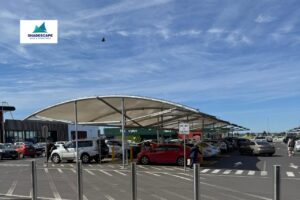
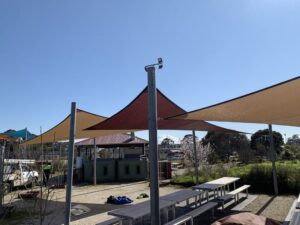
That is where commercial shade sails often work best. Sails can cover wide spans with fewer posts, so more of the pool surround stays open. Our team has installed commercial shade structures for schools, childcare centres and car parks, so we understand what shared sites need from design to certification.
If you manage a shared pool, ask these questions before you compare quotes:
- Is the design engineered and certified? Shared sites need proper engineering for wind loads and fixings.
- Does it respect the pool barrier? Post positions must be checked against the barrier rules before anything is built.
- Can staff still see the whole pool? Shade should never block clear sightlines for supervision.
- Which fabric suits the site? Mesh gives airflow, and waterproof PVC gives rain cover for seating areas.
- Who looks after maintenance? A yearly inspection plan protects your investment and your users.
- Can the work be done around opening hours? Good planning keeps disruption low.
Shade Sails for Backyard Pools: What Melbourne Homeowners Should Know
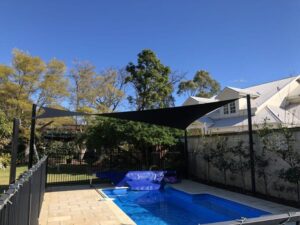
For homes, the biggest advantage is flexibility. Our residential shade sails are custom-built to fit your yard, not the other way around. Since few backyards are perfect rectangles, a custom sail follows your pool shape, boundary, and slope.
Good pool shade starts with the sun, not the fabric. We study where the sun falls across the day and across the seasons. Then we choose the shape, height, and angle that give you shade where you need it.
A well-designed backyard setup usually includes:
- Partial coverage. You do not have to cover the whole pool. Shading about 50% of it often strikes a good balance of sun and shade.
- Overlapping sails. Two or three sails at different heights can cover a wide area and look more modern than one big sheet.
- Posts set back from the pool edge. This keeps the structure clear of the pool shell and the safety barrier.
- A visible slope. A clear high side and low side helps the sail stay tight and shed water.
- Light in winter. The design should still let sun reach the deck on cooler days.
Shade Sail vs Pergola for a Swimming Pool: Side-by-Side Comparison
The shade sail vs pergola debate is not about which one is always better. Each structure serves specific purposes well. The table below compares them around a pool.
| Factor | Custom Shade Sail | Pergola |
| Shade over the water | Can be shaped and angled to shade exactly the part of the pool you choose. | Gives strong shade under the frame, but only where the frame sits. |
| Posts near the pool | Usually needs fewer posts, set further from the pool edge. | Usually needs four or more posts and bigger footings. |
| Rain cover | Mesh lets rain through. Waterproof PVC gives full rain cover. | Solid or louvred roofs give strong rain cover. |
| Heat | Mesh lets hot air escape. PVC holds more heat. | A solid roof can trap heat unless it is ventilated. Louvres can be adjusted. |
| Design flexibility | Triangles, curves and overlapping layers suit odd shapes. | Mostly rectangular and fixed in shape. |
| Typical cost | Usually lower. | Usually higher. |
| Wind | Needs strong posts and engineered tension. | Solid frames handle wind well when properly engineered. |
| Upkeep | Fabric needs yearly checks and replacing after many years. | The frame lasts a long time, but the roof and finish need upkeep. |
| Council rules | Depends on size, height, fabric, and location. | Often more likely to need a permit, but it depends on your council. |
| Best for | Shading water, wide spans, odd shapes and tighter budgets. | A permanent outdoor room, dining, lighting and kitchens. |
If you want a broader view of how the two compare on a patio, read our guide on shade sails vs pergolas for patios. This page focuses on what changes when water and a safety barrier are involved.
When a Pergola Is the Better Choice
We build sails every day, but a pergola is occasionally a better fit. A pergola may suit you better if:
- You want a solid, permanent roof over a lounge, dining table or outdoor kitchen.
- You want built-in lighting, fans or heaters.
- You want full rain cover all year and do not want to think about fabric.
- You are building a structure attached to the house as a true outdoor room.
- You prefer the look of a solid frame and timber or aluminium finishes.
If none of these apply, a sail will usually give you better shade over the pool itself and better value. If you are unsure, we are happy to talk through both options on site.
Can You Use a Sail and a Pergola Together?
Yes, and many homes do. A pergola over the main seating area gives you a solid, permanent space. A sail can then stretch shade over the pool or the lawn without adding more heavy framing.
This mix works well because each structure does what it does best. The pergola gives comfort and weather cover. The sail delivers flexible, targeted shade and keeps the pool area open.
Pool Barrier Rules and Shade Sail Posts in Victoria
This is the part most generic guides skip, and it matters. In Victoria, a pool must have a compliant safety barrier. Around that barrier is a non-climbable zone, which must stay clear of objects a child could use to climb over.
Shade sail posts, brackets, cables and fixings can create exactly that kind of climbing point if positioned incorrectly. That is why post positions must be planned against the pool barrier rules from the start.
Here is what we check on every pool project:
- Post and fixing positions. Nothing should give a child a way to climb the barrier.
- Barrier integrity. We avoid fixing a sail to the pool fence unless a building surveyor confirms it is acceptable.
- Permit needs. Regulations depend on your council, structural height and size, the fabric, and where it sits. Some pool barrier work also needs a permit.
- Current requirements. Victorian pool barrier rules and Australian Standard AS 1926.1 can change, so we check the latest guidance each time.
We do not guess these details. We confirm them with your council or building surveyor, and we handle engineering certification and the permit process for you wherever required.
HDPE Mesh or Waterproof PVC: Which Fabric Suits a Pool?
The fabric you choose changes how the pool area feels. There are two main options.
HDPE shade cloth is a breathable mesh. It blocks up to 98% of UV rays, lets hot air rise through the weave, and lessens structural stress during strong winds. It suits most backyard pools and sunny commercial sites.
Waterproof PVC is a solid membrane. It blocks rain, leaves, and bird droppings, so seating areas stay dry. It holds more heat than mesh, so it works best when the design allows good airflow. It also catches more wind, so the posts and footings need to be stronger.
Our waterproof shade sails feature a clear slope so water runs off to a planned point and does not collect on the fabric. In short, mesh is the cooler choice for the pool itself, and PVC is the drier choice for seating.
Hardware, Posts and Footings Near a Pool
Pools are hard on hardware. Chlorine, salt, and constant moisture can corrode cheap fittings rapidly. For that reason, we use 316 marine-grade stainless steel hardware on pool projects.
Posts and footings need the same care. Digging near a pool shell, pipes, or electrical lines requires planning, and the footings must be designed so they do not disturb the pool. Our steel posts sit in engineered concrete footings that suit your soil and the loads on the sail.
If you plan to fix a sail to the house or a garden wall, check the structure first. A weak fixing is one of the most common causes of failure. Our guide on how to attach a shade sail to a brick wall or concrete slab explains what makes a safe connection.
Wind, Hail and Melbourne Weather
Melbourne weather changes fast, and a sail over a pool has to cope with strong gusts. A tensioned sail catches wind like a large flat surface, so the engineering behind it matters more than the fabric.
We design to Australian wind load standards, including AS/NZS 1170.2, and we choose fabric that meets AS/NZS 4174. For exposed sites, read our guide to shade sails in high wind areas before you decide on a layout.
Coastal and bayside sites need extra care because of salty air. If you are near the water in Geelong or the bay, our team also provides shade sails in Geelong designed for those conditions.
Hail is another point to be honest about. A tensioned sail absorbs hail well, but no structure is hail-proof. Very large hail can damage any cover.
Cheap hardware-store kits are the most common failures we see. They often have light fixings, no engineering, and poor tension. Over a pool, a failed sail is both a cost and a safety risk.
How Much Does a Pool Shade Sail Cost in Melbourne?
Every pool is different, so we do not provide one fixed price without measuring first. These are the main factors that affect the cost:
- Size and shape. Larger or more complex designs need more fabric and engineering.
- Fabric type. HDPE mesh is usually more affordable than waterproof PVC.
- Number and size of posts. Wind loads and span decide how strong the posts must be.
- Footings and ground conditions. Soil type and proximity to the pool shell change the footing design.
- Marine-grade stainless steel costs more than standard fittings but lasts much longer near a pool.
- Permits and certification. Some structures need engineering and a permit.
A pergola usually costs more because of the framing, roofing, and extra footings. Contact our team for a free site measure and a clear written quote.
Looking After a Pool Shade Sail
A quality shade sail can last for many years, but it needs basic care. Pool chemicals, leaves, and weather all take a toll over time.
These simple habits help:
- Rinse the fabric with fresh water periodically to remove dust, salt, and chemical residue.
- Clean with mild soapy water and a soft brush. Avoid bleach and harsh chemicals.
- Remove leaves and debris so water does not collect.
- Check fixings, shackles and hardware at least once a year.
- Look for small tears, sagging, or rust early.
Our shade sail maintenance and repairs service can fix small problems before they become expensive. If your existing sail looks tired, a shade sail audit will determine whether it requires a repair, re-tensioning, or replacement.
FAQs
Can you put a shade sail over a swimming pool?
Yes, in most cases. A shade sail can cover all or part of a pool, as long as the posts are placed correctly and the design respects the pool barrier rules. The structure should be engineered, and you should verify post positions before building.
Will a shade sail keep my pool water cooler?
It can help. Shade reduces direct sun on the water, which can keep the temperature lower and reduce chlorine loss from sunlight. How much it helps depends on how much of the pool you cover and how deep the pool is. Treat it as a helpful benefit, not a guaranteed temperature drop.
Do you need a permit for a shade sail over a pool in Victoria?
It depends on the size, height, fabric, location, and your council. Some small shade structures may not need a permit, but larger sails and any work near the pool barrier often do. Check with your council or building surveyor before you build. We can manage the permit and engineering for you.
Can shade sail posts be attached to the pool fence?
Do not assume they can. The pool fence is a safety barrier, and attaching a sail to it can weaken the barrier or create a climbing point. In most cases, we use separate posts set clear of the barrier.
Is a shade sail or a pergola better over a pool?
For shading the water itself, a sail is usually the better and cheaper choice because it needs fewer posts and can be shaped to the sun. A pergola is better if you want a permanent roof, lighting, and an outdoor room. Many homes use a pergola for seating and a sail for the pool.
Will a shade sail stop leaves and bird droppings getting in my pool?
It reduces them, but it may not stop everything. Mesh blocks most larger debris and some droppings, while waterproof PVC blocks most of it. Wind can still blow small debris in from the sides, so routine pool care is still needed.
Which fabric is best over a pool, HDPE mesh or PVC?
Mesh is usually best for cooling and airflow over the water. Waterproof PVC is best when you also want rain cover for seating. Our guide on waterproof shade sails vs mesh in Melbourne winters explains how each performs seasonally.
How long do pool shade sails last, and are cheap kits worth it?
With quality fabric, marine-grade hardware, and regular checks, an engineered sail can last for many years. Cheap kits fail early because of weak fixings, poor tension, and no engineering. Over a pool, that is a risk we would not take.
Ready to Shade Your Pool Properly?
Pool season is here, and the best time to plan is before the heat arrives. Whether you manage a shared pool for a school, hotel, or apartment complex, or you want to protect your own backyard, ShadeScape designs shade structures built for Victorian conditions.
Book a free site measure and quote with our Melbourne team today. We will design the right solution, handle the engineering and permits, and keep your pool area safe and cool.