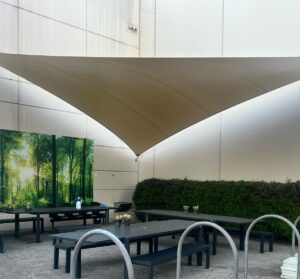

Picture the end-of-year lunch. The boss has booked the courtyard, the catering is ordered, and by 12.30 pm nobody wants to sit in it.
Melbourne summers do that to outdoor spaces. The fix is often simpler than people expect, and shade sails for outdoor entertaining are one of the quickest ways to take the sting out of a hot courtyard, deck or barbecue area. This guide starts with commercial spaces, moves on to backyards, and covers what to check before you order.
Short answer: Yes, a well-designed shade sail can make a courtyard, deck, rooftop or barbecue area comfortable on hot days. Commercial sites usually need engineered design and a building permit. Breathable fabric keeps air moving, while waterproof PVC keeps rain off but asks more of the structure. Plan early, because design, approvals and footings all take time.
What Has Changed In Outdoor Shade, And Where Sails Fit
Walk into any outdoor showroom today, and the choice is wider than a marquee or a sail. Suppliers now promote motorised louvred roofs, retractable awnings and retractable sail systems, and most vendors sell the idea of an all-weather outdoor room.
Some of those products are excellent. A louvred roof closes against rain. A retractable awning folds away when you do not need it.
You will also read that a shade sail is the budget option, and that such covers can look faded and saggy after a couple of years. That can happen when a sail is undersized, cheaply made, or badly tensioned. A properly engineered sail, built with the right fabric and hardware, is different. It won’t open and close during the day, and it will not shed a downpour unless the fabric is waterproof PVC.
Here is a fair side-by-side look at the shade sail vs louvred roof question, plus the other common options:
|
|
Shade sail |
Louvred roof |
Retractable awning |
Pergola |
|
Look |
Light, angled, modern |
Solid, architectural |
Sleek, fixed to a wall |
Traditional or modern frame |
|
Rain cover |
Only with waterproof PVC |
Closes to shed rain |
Retracts before heavy rain |
Depends on the roof |
|
Adjustable |
No, fixed once built |
Yes, adjustable blades |
Yes, extends and retracts |
No |
|
Odd shapes and wide spans |
Often a good fit |
Needs a regular footprint |
Limited by wall length |
Needs a regular footprint |
|
Building permit |
Depends on fabric, size, and site |
Usually required |
Depends on size and site |
Depends on roof and size |
We build shade sails and structures. If another option fits your site better, we will tell you.
Commercial Shade Sails in Melbourne: Work Parties, Venues and Staff Areas
Commercial spaces ask more of a sail than a backyard does. Such sites involve heavier foot traffic, more rules, and mandatory sign-offs.
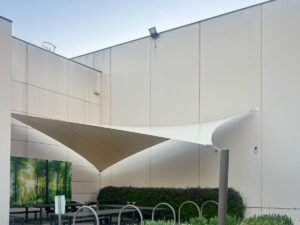
For a work Christmas party, a sail over the seating and food area can turn a courtyard, rooftop or forecourt into a proper venue. Cafes, pubs and breweries get a similar benefit, because uncovered tables often sit empty on a hot afternoon. Strata properties use sails over shared barbecue areas and play spaces.
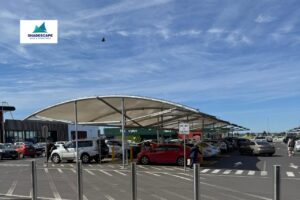
Our commercial shade sails in Melbourne are designed around how people will use the space, rather than simply matching its dimensions. On larger sites, several smaller sails often outperform a single massive canopy because a single repair does not close the whole area.
Shade also matters for people who work outside. WorkSafe Victoria recommends sun protection whenever the UV index reaches 3 or above, and it lists shade among the controls employers should consider for outdoor work. It still wants hats and sunscreen worn in the shade.
A Cancer Council Victoria survey reported by SunSmart found that 21 per cent of Victorian businesses with outdoor workers had no sun protection policy. A shaded staff break area will not replace a policy, but it is a visible part of one. We are builders, not safety advisers, so speak to your safety team about what your site needs.
School and childcare play areas are a big part of our work. You can see examples in our recent projects.
Waterproof Or Breathable? Choosing Sail Fabric For Events
Breathable HDPE shade cloth lets warm air and some rain pass through. The air under it tends to feel fresher, and the cloth generally handles wind better than solid fabric. It will not keep a party dry, though.
Waterproof PVC keeps the rain off, so it suits events that cannot move indoors. The trade-offs are real. It requires the right fall to prevent pooling, retains heat, and places greater demands on posts and footings. It also changes the permit picture, which we cover below.
If rain cover is your priority, explore our waterproof shade sails for commercial spaces.
Whichever fabric you choose, ask for a UVE rating tested to AS 4174:2018. ARPANSA, Australia’s radiation protection agency, recommends the UVE rating for shade fabrics rather than a UPF rating.
Shade Sails For BBQs And Christmas Lunch At Home
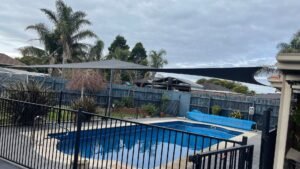
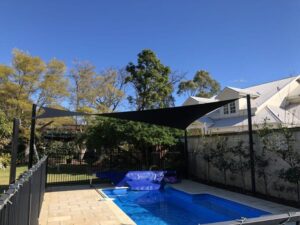
Now the backyard. Melbourne can serve up a cool, drizzly Christmas Day or a blazing one, sometimes within the same week. A sail over the deck gives guests somewhere to sit between the grill and the table. Our residential shade sails suit patios, decks, and gardens, and the planning steps match commercial work.
For good backyard BBQ shade, think about these four things:
- The sun path. Plan for the hours you will be outside, not just midday. The afternoon angle changes everything.
- The layout. Leave room for tables, chairs, and a clear path to the barbecue.
- Fire safety. Keep the sail clear of flames and hot surfaces. AS 4174:2018 includes flammability requirements for shade fabric, but safe distances depend on your barbecue and your sail. Ask your builder and follow the barbecue maker’s instructions. We have not given a distance here because it varies.
- Evening gatherings often need lights. Qualified electricians must handle any electrical installations, so let your builder know about fixing points well in advance.
Timing catches people out. Design, council checks and concrete curing around the posts all take time, so a new sail may not be ready for the first Christmas function. Ask your builder for current lead times before you plan around a date.
If your barbecue area sits beside a pool, read our guide to shade sails for swimming pools before you decide where the posts go.
Permits, Standards And Engineering: What To Check Before You Order
The permit question is where many projects stall, so it pays to ask early. In Victoria it depends on the fabric, size, height and type.
Victoria’s Building Regulations define a pergola as an open structure that may have a covering of open-weave, permeable material. The Victorian Building Authority says a shade sail with a permeable covering can fall under that definition and be exempt if it meets the criteria. Council guides, such as those from Knox and Wodonga, list pergolas and shade sails attached to a building other than a house as needing a permit.
A waterproof PVC sail is not permeable, so it generally does not qualify for the pergola exemption either. Council planning rules may also apply, and limits vary between councils. Ask your council or a private building surveyor before you sign anything. This is general guidance, not legal advice.
A sail is a tension structure, so wind and fixings matter as much as fabric. These are the standards that guide the design:
- AS 4174:2018 (Knitted and woven shade fabrics): covers classification, performance and labelling, including UVE ratings and flammability.
- AS/NZS 1170.2 (Wind actions): used by engineers to design for wind loads on the structure.
ShadeScape’s registered commercial builders have more than 10 years of experience. Every commercial sail should come with engineered design and the certification your site needs. If an existing sail looks tired or sags, a shade sail audit and inspection can check the fabric, posts, and fixings.
Local Conditions In Melbourne And Geelong
Melbourne’s weather can change in an afternoon. Strong winds, summer heat, high UV and the odd hailstorm all put stress on a sail. A sheltered courtyard in the inner north, a corner block in Truganina and an exposed site in Geelong experience entirely different environmental pressures.
Hail can mark or tear fabric, so ask your builder how the design copes and whether it should come down before a severe storm. Councils also differ, so what is exempt in one area may need a permit in another. For sites further south-west, see our shade sails in Geelong page.
After a storm season, a sail is worth a look-over by someone who knows what to check.
When another option is the better choice
A sail is not the answer for every space. Another option may suit you better when:
- You need guaranteed rain protection for events that run in all weather
- You want shade that opens and closes during the day
- The site has no spot for posts and footings, or the building cannot take the loads
- The site is so exposed to wind that a sail would need extreme engineering
In those cases, a louvred roof, a solid pergola roof or a retractable system may be a better fit. A short site visit usually settles it.
A quick checklist before party season
- Decide how many people will use the space and when.
- Ask your council or building surveyor about permits.
- Choose breathable or waterproof fabric matching how you will use it.
- Check wind exposure and where posts and footings can go.
- Ask for current lead times, then plan the event around them.
- Ask what warranty covers the fabric and hardware fittings.
Shade Sails For Outdoor Entertaining: Your Questions Answered
Do shade sails work for Christmas parties in Melbourne?
Yes, they can make a hot courtyard, deck or rooftop much more comfortable. Shade cuts direct sun exposure, creating a sheltered spot for people to sit. Fabric choice and layout determine how well it works for your event.
Do you need a building permit for a commercial shade sail in Victoria?
In most cases, yes. Council guides list sails attached to non-house buildings as needing a permit, and waterproof PVC sails generally do not qualify for the pergola exemption. Check with your council or building surveyor, because limits vary.
Can you put a shade sail over a barbecue?
Usually you can, provided the sail stays clear of flames and hot surfaces. Fabric flammability and safe distances depend on your barbecue and sail. Ask your builder and follow the barbecue maker’s instructions.
Will a shade sail keep the rain off?
Only if the fabric is waterproof PVC, breathable shade cloth lets some rain through. Waterproof sails also need the right fall so water drains and does not pond.
Does a shade sail sag after a couple of years?
It can, if it is undersized, cheaply made, or poorly tensioned. Good fabric, proper hardware and correct tension all help it hold its shape. Regular checks, maintenance and repairs keep small problems from growing.
Is a shade sail better than a louvred roof?
Not always. A sail suits odd shapes, wide spans and partial shade, while a louvred roof gives adjustable cover that closes against rain. Your site, budget and permit position decide.
How long does it take to install a shade sail?
We cannot give one honest number. Design, approvals, footings, and concrete curing all take time, and every site is different. Ask your builder for current lead times before you book an event around the install.
Does shade protect staff from UV?
Shade minimises direct UV exposure; it’s no substitute for hats, sunscreen and protective clothing. WorkSafe Victoria advises sun protection even in the shade. Speak to your safety team about what your workplace needs.
Shade sails for outdoor entertaining: where to start
Shade sails for outdoor entertaining can turn a hot, empty corner into the spot everyone wants, whether it is a work Christmas party or a family barbecue. Get the permit, the fabric and the engineering right first, and give yourself time before the date that matters.
If you manage a commercial site or host at home, we are happy to talk it through. Contact the ShadeScape team for advice on your space in Melbourne or Geelong.