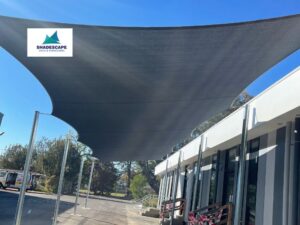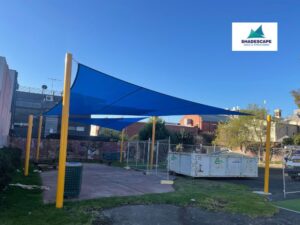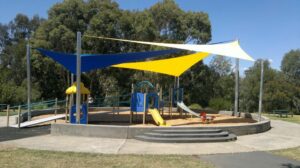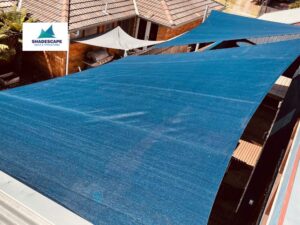
A commercial shade project can look simple from the ground. Put up a few posts, tension the fabric, and create a cooler outdoor area.
Near the coast, there is more going on.
A site in Geelong can be exposed to strong winds, intense sunlight, salty air, and repeated weather changes. Move closer to the coast around Ocean Grove or Barwon Heads, and those environmental factors can become an even bigger part of the specification.
That is why choosing commercial shade sails Geelong businesses can rely on should start with the site, not with a catalogue of colours and shapes.
The real questions are different.
What should the posts be made from? How should they be protected against corrosion? Which fittings can cope with salt exposure? Should the sail be breathable or waterproof? How should the structure be engineered? And what will happen to it five or ten years from now?
Those decisions are connected.
Get one wrong, and it can affect everything from fabric tension to overall structural performance. This is the thinking behind the coastal shade sails Geelong properties actually need. It is not about choosing a bigger sail, but specifying the right one.
Why Does a Coastal Shade Sail Need a Different Specification?
A shade sail beside the coast does not necessarily need a completely different design from one inland, but the environment needs to be assessed properly.
Wind is a major part of structural design. Under AS/NZS 1170, the Australian standard covering structural design actions, wind loads are calculated based on factors including a site’s location, surrounding terrain, building height, and the geometry of the structure being designed. Open-sided fabric structures can also experience significant uplift, meaning the design must account for forces trying to pull the structure upward rather than just push it sideways.
Then there is the salt in the air.
Coastal exposure accelerates corrosion of exposed steel and fittings. Sites within a few kilometres of the coast, especially those directly exposed to sea spray, typically sit in a higher corrosivity category than inland sites — which means material selection and protective coatings matter more, not less.
With strong UV exposure, moisture, and regular use by customers, students, staff or visitors, a commercial shade structure has to do more than simply provide shade.
It has to work as a complete system.
Fabric. Structure. Fixings. Footings. Drainage. Maintenance.
That is the starting point for good coastal design, and part of the broader thinking behind commercial shade sails done properly for exposed environments.
The First Weak Point May Not Be the Fabric. It Could Be the Post.
People naturally look at the sail first.
That makes sense. It is the most visible part.
But the fabric is only one part of a tensioned structure.
Think of the load path:
Fabric → corner hardware → cable or connection → post or building attachment → footing or structural support → ground
Every connection along that path has a job. A large sail can transfer substantial forces into its support points, especially when wind acts on the structure. That means a beautifully finished fabric can still be let down by an under-specified post, a weak connection, or an inadequate footing.
This is why there is no sensible answer to questions such as, “What is the one correct post size for a coastal shade sail?”
The answer depends on the project.
Post section and thickness should be selected as part of the structural design, taking into account factors such as sail geometry, span, wind actions, support arrangement and ground conditions. A small courtyard sail and a large commercial structure should not be treated as the same job simply because both use fabric.
Getting this right from the outset is one of the reasons proper shade sail engineering matters more on coastal and exposed sites than it does on a sheltered inland courtyard.
What Steel Post Should You Specify Near the Coast?
This is where a quote needs a little more detail than “steel posts included.”
Ask what steel is being used. Ask how it is protected. And ask what the specification is intended to achieve in the actual environment.
Hot-dip galvanised structural steel
Hot-dip galvanising protects steel by creating a durable zinc coating through a manufacturing process in which fabricated steel is immersed in molten zinc. The process is governed in Australia and New Zealand by AS/NZS 4680, the standard covering hot-dip galvanised coatings on fabricated ferrous articles, and it produces a substantially thicker protective zinc layer than typical zinc plating.
That distinction matters outdoors.
Zinc plating is not the same thing
Zinc-plated components can look similar when new, but the coating is much thinner. As a general rule, zinc plating is not the preferred specification for outdoor structural steel exposed to rain, humidity, UV, and potentially salt air — it is better suited to indoor or light-duty components.
| Finish | Typical use | Coastal suitability |
| Zinc plated | Indoor/light-duty components | Not the preferred structural specification |
| Hot-dip galvanised | Outdoor structural steel | A much more appropriate starting point |
| Additional protective coating system | Higher-exposure environments | May be considered depending on the specification |
So when comparing commercial shade structures in Geelong, do not stop at the word “galvanised.” Ask what process is being used and what standard applies.
What about powder coating?
Powder coating can provide an additional protective and decorative finish, but it should be considered as part of a complete corrosion-control system rather than a magic shield against the coastal environment.
The details matter:
- steel preparation
- coating system
- coating quality
- exposed edges and connections
- damage during installation
- ongoing inspection
Corrosion problems are often influenced as much by coating damage, physical abrasion and water-trapping details as by the coating itself.
Is powder-coated steel enough for a beachside shade sail? On its own, no single coating should be treated as sufficient. What matters is the complete corrosion-protection system, the base steel, the coating, and the way connections are detailed for the specific site.
The Smallest Parts Can Become the Biggest Coastal Problem
A structural post may look perfectly sound while a small fitting is starting to deteriorate.
That is why exposed hardware deserves the same attention as the main steelwork. For a coastal installation, the specification may include components such as:
- turnbuckles
- shackles
- pad eyes
- cables
- bolts
- connection plates
- other exposed fixings
316 marine-grade stainless steel hardware is generally recommended for salt-exposed sites, including applications around Ocean Grove and Corio Bay. The reason is straightforward: the coastal environment is hard on metal, and connections are often the first place that shows it.
There is another issue that can be overlooked during product selection: dissimilar metals. Direct contact between different metal types, for example, an unsuitable fastener against a stainless fitting, creates a recognised corrosion risk known as galvanic corrosion, and it’s one that a generic “stainless steel hardware” line item on a quote won’t necessarily protect against.
So a professional specification is not just about selecting “stainless steel” somewhere on the quote. The connections between different materials also need to be considered — that is the level of detail worth checking before installation.
Which Shade Sail Fabric Makes Sense for a Geelong Coastal Site?
There is no single fabric that is right for every commercial application.
Start with what the space needs to do.
A shaded playground has a different job from an outdoor dining area. A customer waiting space has a different job from a car park. A covered commercial courtyard might need rain protection for much of the year, while an exposed recreational area may benefit more from airflow.
Rather than repeating a generic fabric comparison, it’s more useful to consider the decision from the user’s perspective.
Breathable HDPE shade fabric
HDPE shade fabric is commonly used where shade and airflow are the main priorities. Its open construction allows air to move through the material rather than treating the sail like a solid roof.
That can be useful on exposed sites because the structure is not simply presenting a flat, impermeable surface to every gust — a meaningful advantage for outdoor shade solutions on windy coastal ground.
Waterproof membranes
A waterproof shade sail makes more sense when the outdoor area needs reliable protection from both sun and rain. That can be useful for commercial dining, hospitality areas and other spaces expected to remain usable in wet weather.
The trade-off is that waterproof membranes behave differently from breathable mesh. They do not allow the same airflow, and they can place greater structural demands on the supporting system — geometry, load distribution, and drainage all need careful attention, including enough pitch so rainwater does not pool on the membrane.
For a closer look at how the two compare, see ShadeScape’s dedicated page on waterproof shade sails.
The question isn’t “Which fabric is best?”
The better question is: what does this area need the shade sail to do?
That’s a much more useful way to think about shade sail installation in Geelong, coastal or otherwise.
Waterproof or Breathable? Let the Space Decide
Imagine two commercial properties.
One is a busy outdoor dining area where customers still want to sit outside after a sudden shower. Here, rain protection has obvious value.
Another is an open recreation area where airflow, UV protection, and a comfortable shaded environment matter more than keeping every drop of rain out.
The specification can be completely different. That is the point.
A good coastal shade solution is not based on the fabric that sounds most premium. It is based on the conditions the structure will actually face. A commercial property in Barwon Heads, for example, may have very different exposure from a sheltered inner-site installation. The same principle applies at Ocean Grove. The suburb gives you a geographic starting point — the actual site determines the specification.
Wind Is Not Just About “How Windy Is Geelong?”
This is where many buying conversations become too simple.
“Is Geelong windy?” That is not enough information to design a structure.
A site can behave differently depending on its surroundings. Consider:
- nearby buildings
- open areas
- orientation
- elevation
- surrounding terrain
- sail height and geometry
- the size of the structure
- how exposed the site is
Australian wind design accounts for these variables rather than applying one blanket wind figure to every project. For a broader look at how wind exposure affects structure choice, ShadeScape has a dedicated article on shade sails in high wind areas, so this piece won’t repeat that discussion in full.
The useful takeaway here is simpler: a coastal site needs a site-specific assessment, not a generic wind assumption. That distinction can affect the posts, footings, connections, and fabric choice before a single post hole is dug.
Why Sail Shape and Tension Matter More Than People Expect
Fabric does not perform independently of its geometry.
The shape of the sail determines how forces move through the structure. The position and height of the attachment points also play an important role in maintaining tension, drainage, and helping the fabric respond to changing conditions.
For waterproof systems, the sail needs a suitable slope so rainwater does not collect on the membrane. For breathable systems, proper tension still matters, because loose fabric can move, flap, and wear out faster.
The goal is not simply to make a sail look tight on installation day. It is to create a geometry that works for the site, starting with accurate sizing. If you’re planning your own layout, ShadeScape’s guide on how to measure a shade sail area explains the process in detail.
Don’t Forget What’s Happening Under the Sail
The structure is overhead. The consequences are underneath.
That is particularly important for commercial properties. Think about the people using the space.
Where will rainwater go? Will water be redirected toward a walkway? Could drainage create slippery surfaces? Is there enough clearance for the intended use? Can people move through the area safely? Can maintenance crews access the structure later?
These questions sound obvious once they are asked. They are much less obvious when the focus stays entirely on the fabric. For waterproof applications, drainage deserves special attention, because the membrane is designed to move water rather than let it pass through — getting the pitch and drainage path right is part of the design, not an afterthought.
A good shade structure should solve one problem without creating another.
What About Corrosion at Ground Level?
People often inspect the visible steel and forget about the bottom.
That is a mistake. The area around the base of a post can be exposed to moisture, dirt, impact, and coating damage. Poor drainage can leave water sitting exactly where you don’t want it.
Water-trapping details, physical abrasion, and coating damage are common contributors to corrosion at ground level — so during a coastal site assessment, the question should not be “how do we stop this post from rusting?” It should be “how do we reduce the conditions that encourage corrosion in the first place?”
That means thinking about:
- steel specification
- protective finish
- footing detail
- drainage around the base
- exposed connections
- physical damage
- future inspection
Small details can have a long-term effect.
A Coastal Shade Sail Can Be Well Designed and Still Be Poorly Maintained
Installation is not the end of the project.
Salt, dirt, leaves, bird droppings, moisture, and general outdoor use continue after the installers have left. Over time, you may see surface corrosion, loose or altered connections, loss of fabric tension, staining, fabric wear, or damage around attachment points.
Regular attention to fabric tension, cleaning, wall plates, steel welds, and visible surface rust makes a real difference here — and if you’d rather have it checked properly than guess, a shade structure audit is a structured way to catch problems early. For ongoing care once a structure is up, ShadeScape’s maintenance and repair service covers what’s involved.
The key point for a new commercial project is simple: plan for maintenance from day one.
How Long Should Coastal Commercial Shade Sails Last?
This is one of those questions where a single number can be misleading.
The useful question is not only how long the fabric lasts. Think about the whole system:
- Fabric life
- Hardware life
- Coating life
- Structural life
They do not necessarily age at the same rate. Service life can also vary with UV exposure, coastal conditions, material selection, engineering, workmanship, maintenance, and severe weather events.
As a general guide, a well-specified commercial shade sail typically lasts around 10 to 15 years, with maintenance and cleaning playing a real role in where a structure lands in that range. So rather than chasing a promised lifespan, ask what has been specified to help the complete installation perform over time. That is a much better conversation.
What Should Be Included in a Commercial Shade Sail Quote?
This is where comparing prices gets interesting.
Two quotes can look similar at the top and be very different underneath. Before approving commercial shade sails Geelong businesses will rely on, ask whether the proposal addresses:
- Site assessment
- Intended use and coverage
- Wind and site conditions
- Structural design where required
- Steel post section and specification
- Corrosion-protection system
- Exposed hardware specification
- Fabric type and performance
- Waterproof or breathable construction
- Drainage and pitch
- Footing design
- Installation methodology
- Warranty information
- Maintenance expectations
The point is not to turn every quote into a technical document. It is to make sure you are comparing like with like — a cheaper quote can sometimes be cheaper because something has been left out.
The Cheapest Coastal Shade Quote May Not Be the Cheapest Project
Price matters. But the first number on a proposal is not the whole cost of ownership.
Consider where differences can appear: a lower-grade coating, a different hardware grade, lighter fabric, and a simpler structural approach may reduce the upfront price. Each of those decisions can have consequences later.
That does not mean the most expensive option is automatically the right one. It means the decision should be based on specification, suitability, and expected use — not price alone. When you’re comparing commercial shade structures in Geelong, ask one simple question: “What exactly am I getting for this price?” That question can reveal more than another round of negotiating.
From Ocean Grove to Barwon Heads, Start With the Site
A coastal location is useful for understanding the broader environment. It is not enough for making the design decision.
A business in Ocean Grove may be in a highly exposed location, or it may have buildings and other structures providing some shelter. A business in Barwon Heads can have a completely different site arrangement, orientation and outdoor use.
That is why two properties in the same coastal region can end up with different fabric, post sizes, corrosion protection, hardware, footings, sail geometry and drainage arrangements.
The smarter approach is to use the location as context and the site assessment as the decision-maker — the same principle behind good shade sails Geelong planning more broadly.
What Makes a Coastal Commercial Shade Project Worth Doing Properly?
The value of a well-planned shade structure is not just about how much shade it creates. It is measured by how well the space continues to work.
A successful project can help a commercial area remain usable during hot weather, support outdoor dining or recreation, provide a more comfortable waiting area, or make previously underused space practical for more of the year. But all of that depends on the structure performing as intended.
That brings us back to the original chain: environment → design → materials → structure → installation → maintenance. Break the chain, and the result can suffer. Connect it properly, and the shade structure becomes part of the site’s long-term function rather than a temporary cover overhead.
Why ShadeScape for Commercial Shade Sails Geelong?
Choosing a contractor is about more than finding someone who can manufacture fabric. You want a team that understands the relationship between the site, the structure and how the finished space will actually be used.
ShadeScape’s Geelong service covers commercial design, fabrication and installation, with projects spanning commercial sites, schools, childcare, councils, sports clubs and parks. The company has 10 years in business, more than 250 completed projects, and registered commercial builder credentials.
That experience matters, because every site starts with a different set of questions:
What are we covering? What conditions will the structure face? How will people use the space? What level of weather protection is needed? What needs to be protected from corrosion? What needs to be accessible for future maintenance?
Instead of forcing every property into the same solution, the better approach is to work through those questions first — the foundation of properly considered custom shade sails Geelong properties can depend on for years, not just one season.
Before You Approve the Design, Ask These 7 Questions
Before you sign off on coastal shade sails Geelong projects, ask:
- What wind conditions has the structure been designed for?
You should understand what site and structural conditions were considered, rather than receiving a vague assurance that the sail is “strong.”
- What steel protection system is being specified?
Ask whether the structural steel is galvanised, coated, or protected through a combination of systems, and which standard applies — AS/NZS 4680 governs hot-dip galvanised coatings on fabricated ferrous articles in Australia and New Zealand.
- What grade are the exposed fittings?
For coastal installations, exposed hardware deserves specific attention rather than being treated as an afterthought.
- Why was this fabric selected?
The answer should relate to the site’s use, not simply price.
- How will rainwater drain?
This becomes especially important with waterproof membranes, where pitch and drainage are part of the design.
- How will the structure be maintained?
You should know what needs periodic inspection, cleaning, or adjustment.
- What documentation and warranty are included?
A proper project should leave you with a clear understanding of what has been supplied and what the warranty actually covers.
Planning Commercial Shade Sails in Geelong? Start With the Environment
A coastal commercial shade project should never begin with “Which sail looks best?”
Start with a few simple questions: Where is the site? How exposed is it? How will people use the space? What needs to be protected from sun or rain? Which materials can cope with the environment? How will the structure be maintained?
Once those questions are answered, the right fabric, steel, fittings, geometry and support system become much easier to determine. That is the difference between simply putting up a sail and specifying a commercial shade solutions in Geelong businesses can use with confidence.
For a project in Geelong or nearby coastal areas such as Ocean Grove and Barwon Heads, ShadeScape can assess the site, discuss the intended use, and develop a shade solution around the actual conditions rather than forcing a generic product into the space.
Ready to Plan Your Coastal Shade Project?
Start with the site.
Talk to ShadeScape about your commercial shade sails Geelong for outdoor dining, schools, childcare centres, commercial properties, recreational spaces, and other high-use outdoor areas.
Request a ShadeScape quote or site consultation and discuss the fabric, structure, corrosion protection, drainage and installation requirements before the project begins.
FAQs
Can commercial shade sails be installed near the beach in Geelong?
Yes. Coastal locations can support commercial shade sails, but the design should account for site-specific wind exposure, corrosion risk, material selection, structural support and maintenance requirements.
What type of steel posts are suitable for coastal shade structures?
There is no single post size suitable for every project. Post section, thickness and footing should be determined according to the sail design, wind actions, support arrangement and site conditions. Hot-dip galvanised structural steel is commonly specified for exposed outdoor steelwork, with the complete corrosion-protection system selected for the environment.
Is hot-dip galvanised steel better than zinc-plated steel for outdoor shade structures?
They are different protection systems. Zinc plating is generally too thin for outdoor structural steel exposed to weather and potentially salt air, while hot-dip galvanising produces a substantially thicker zinc coating and is governed by AS/NZS 4680.
Should I choose HDPE or waterproof PVC for coastal shade sails?
It depends on what the outdoor area needs. HDPE shade fabric is useful where breathable shade and airflow are priorities. Waterproof membranes are more appropriate when dependable rain protection is required, but they need careful attention to pitch, drainage, and structural support.
How can I protect a commercial shade structure from coastal corrosion?
Start with an appropriate steel and hardware specification, use a suitable corrosion-protection system, avoid poor water-trapping details, and include regular inspection and cleaning in the maintenance plan. Coastal corrosion depends on the environment, material choice, coating, detailing, and ongoing care.
Plan Your Commercial Shade Project With the Site in Mind
Coastal shade is not about finding the biggest sail or the lowest quote.
It is about making the right decisions before the structure is built. For commercial shade sails Geelong that businesses need to rely on year after year, let the site guide the specification.
Speak with ShadeScape about your project and take the first step toward a properly considered coastal shade solution.