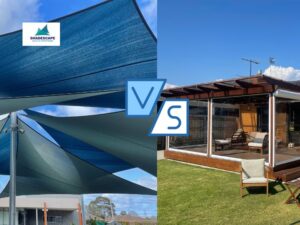
Melbourne’s famous four seasons in one day makes the waterproof shade sails vs mesh decision harder than it looks. A mesh sail is brilliant on a hot January afternoon, but it’s a different story when a cold front rolls in from the bay in July. So which option actually holds up best through Melbourne winters?
This guide gives you a straight answer. We compare PVC vs HDPE shade sails side by side, explain how each one handles rain, wind and cold, and cover the engineering details that decide whether a sail performs well or sags. Whether you’re shading an alfresco in Brighton, a verandah in Belmont or a courtyard in Lara, the same principles apply.
Quick answer: For Melbourne winters, waterproof shade sails made from a non-porous PVC membrane keep a patio or courtyard dry, while knitted HDPE mesh lets rain pass through but copes better with wind and heat. Choose waterproof if you want to stay dry. Choose mesh if summer shade is your main goal.
PVC Waterproof vs. HDPE Mesh Shade Sails: Side-by-Side Comparison
The easiest way to understand PVC vs HDPE shade sails is to look at how each fabric is built. Waterproof sails use a solid, non-porous PVC membrane, often PVC coated with PVDF. Mesh sails use knitted HDPE mesh (High-Density Polyethylene), made with a monofilament and tape weave that leaves tiny gaps so the fabric can breathe. That one difference shapes almost everything else, from rain deflection to heat trapping and shade sail longevity and durability.
| Feature | Waterproof PVC | HDPE mesh |
| Material | Solid, non-porous PVC membrane | Knitted HDPE mesh with a monofilament and tape weave |
| Rain | Sheds water, but needs a clear slope | Lets rain pass through |
| Wind | Acts like a solid surface, so loads on posts are higher | Lets some air through, so loads are lower |
| Heat | Can hold warm air underneath | Lets warm air escape more easily |
| Winter use | Keeps the area underneath dry | Gives shade, not a dry roof |
| Slope needed | Clear high-to-low angle is essential | More forgiving |
| Tension | Higher | Standard |
| Grime and mould | Smooth surface that is easier to wipe | Dust can settle in the weave |
| Cost | Generally higher | Generally lower |
| Best for | Alfresco, cafes, wet-weather use | Summer shade, pools, windy spots |
Think of it as waterproof vs breathable shade sails: neither is “better” in every situation. Each one wins in a different part of the year, which is why the question of standard shade sails vs waterproof shade sails comes up so often.
How Breathable HDPE Mesh Performs in Melbourne Winters
Knitted HDPE mesh is the fabric most people picture when they think of a shade sail. It’s light, usually more affordable, and does a good job of blocking sun. In winter, though, you need to be realistic about what it can and can’t do.
Wind Load Advantages: Letting Gusts Pass Through
Because mesh is open, some air moves through it instead of pushing against it. That helps wind load resistance, since the sail, the hardware and the posts aren’t working as hard in a gust. If your block is exposed, or you’re close to the coast, that’s a real benefit.
Mesh is still not “wind-proof”. Every sail needs correct engineering, so ask your installer how the loads were calculated for your site.
The Winter Drawback: Why Mesh Won’t Stop Heavy Rain
Here’s the honest part. Mesh is made to let air and water through, so it won’t keep you dry. In a light shower you may only notice a fine mist. In heavy rain you’ll get drips, and you can still get wet.
You may also see products described as semi-waterproof shade sails or water-resistant shade sail solutions. Treat those labels with care. They can mean the fabric slows water down, which is not the same as stopping it. Ask for the fabric specification before you decide. If staying dry matters in winter, mesh alone won’t do the job.
Why Waterproof PVC Shade Sails Dominate Year-Round Patio Use
If you want year-round patio protection Melbourne homes and businesses can rely on, a waterproof sail makes the most sense. That’s why most waterproof shade sails in Melbourne are PVC-based: they give you sun cover in summer and a dry space when it rains.
Rain Deflection for Alfresco and Commercial Courtyards
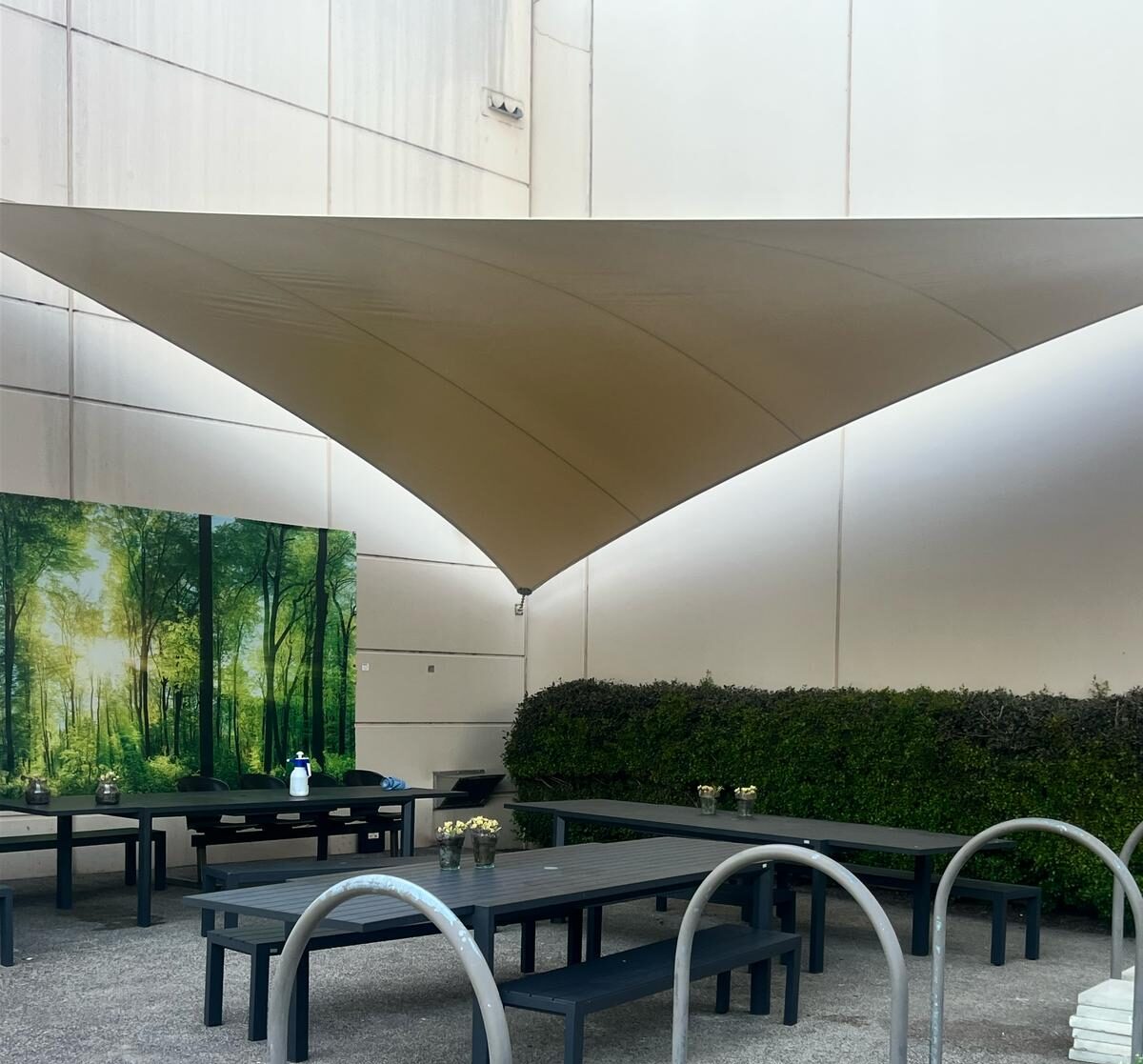
A non-porous PVC membrane doesn’t let water through the fabric. Rain runs off the surface instead, which gives you a winter-proof alfresco and outdoor dining area you can still use on a wet Saturday. It’s also why cafe courtyard weather protection so often relies on waterproof sails: customers will only sit outside if they stay dry.
One practical note. Even a waterproof sail needs good workmanship. Seams, edges and corners are where drips can show up if the sail is poorly made or if water sits on it. Ask how the seams are finished and how the sail will drain.
The “Heat Trapping” Debate: Summer Cooling vs. Winter Warmth
This is the question we hear most. Mesh breathes, so it supports heat dissipation through thermal convection. A solid PVC sail doesn’t breathe in the same way, so warm air can build up underneath on a hot day. That’s the heat-trapping argument, and heat trapping vs heat dissipation is the real trade-off between the two fabrics.
In winter, the trade-off looks different. A dry, sheltered space can feel more comfortable when the weather turns cold, and you’re not dealing with a heatwave. In summer, good airflow around the sail, a decent height and smart positioning all help. If you plan to use a heater under any sail, check the heater manufacturer’s clearance requirements first. With Melbourne’s four seasons in one day, many people choose based on how they’ll use the space most often, not on one hot week.
Mould Resistance and Lifespan in Wet Conditions
Wet, shady spots are where mould and mildew like to grow, so mould, mildew and winter grime resistance matters. Many architectural waterproof fabrics are made as PVC-coated polyester with a PVDF topcoat, which is designed to help the surface stay cleaner and easier to wipe down. It doesn’t remove the need for cleaning, so ask your supplier what the fabric’s warranty covers.
Lifespan depends on more than fabric. Tension, hardware, fixing points and upkeep all play a part, and regular washing and inspection help too. Our blog post Why Do Some Shade Sails Last 15 Years While Others Fail in Two? digs into the details. Good shade sail longevity comes from looking after the whole system, not only the fabric.
Critical Engineering Differences: Pitch, Tension, and Footings
A waterproof sail is not simply a mesh sail in a different fabric. It behaves differently, so it has to be designed differently. If you’re planning heavy-duty waterproof shade sails, these details matter more than the colour you pick.
Preventing Water Pooling with a Steep High-to-Low Pitch
Water can’t pass through PVC, so it has to run off. If the sail is too flat, water collects in the middle. That weight pulls the fabric down, which makes the pooling worse. To prevent water pooling, a waterproof sail needs a clear high-to-low pitch angle (a minimum fall), so that water runoff and drainage have somewhere to go.
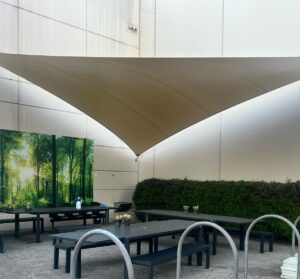
On four-corner sails, installers often use a hypar twist (hyperbolic paraboloid). In plain English, two opposite corners sit higher and the other two sit lower, which gives the fabric a gentle twist that encourages water to run off. Mesh is more forgiving because rain can pass through, which is why a waterproof sail needs a steeper angle than mesh.
Correct measuring helps too. Small errors can lead to sagging and pooling, which is why we wrote How to Measure for a Custom Shade Sail: The Exact Formula for a Perfect Fit.
A waterproof sail also needs higher setup tension. A tight, well-tensioned sail sheds water better and flutters less.
Structural Posts and Footings for Melbourne Wind Loads
Because PVC is solid, it catches more wind than mesh. That force travels down into the posts and the ground, so large waterproof shade sails carry the heaviest loads of all. Structural steel posts and deep concrete footings are usually part of the design, and the exact size should come from the engineering for your site.
A common pitfall is choosing a waterproof fabric but attaching it to a structure that wasn’t designed for the extra load. For larger projects, read How to Choose the Right Steel Posts & Roof Design for a Commercial Outdoor Shade Canopy. Where you fix the sail matters as well, as explained in Why Attaching a Shade Sail to Your Roof Fascia Is a Costly Mistake (And How to Anchor It Properly).
Already have a sail and not sure it’s winter-ready? A shade sail audit and inspection is the safest way to check your posts, hardware and tension before the next storm.
Which Shade Sail Should You Choose for Your Melbourne Property?
The right answer depends on how you use the space. Here’s a simple way to think about it:
- Choose waterproof PVC: if you want to use the area in wet weather, such as an alfresco in Brighton, a cafe courtyard or an outdoor dining area.
- Choose HDPE mesh: if your main goal is summer shade, for example over a pool or a play area, or if your site is very exposed to wind.
- Consider both: if you have several zones. A waterproof sail over the dining table and mesh over the lawn is a sensible mix. If you’re also weighing up a fixed roof, see Shade Sails vs Pergolas: Which Is Best for Your Patio?
If you’re comparing all-weather shade sails in Melbourne, remember that “all-weather” only works when the sail, slope and structure are designed together. If you’re researching waterproof shade structures in Victoria, you’ll find plenty of options, but the best choice always starts with your site. For Melbourne winters, shade solutions that actually last, the fabric, pitch and posts have to work as one system.
ShadeScape offers custom waterproof shade sails in Melbourne for a wide range of spaces.
That includes commercial and residential waterproof shade sails, so whether you manage a venue or want to cover a backyard deck, there’s a starting point for you.
If you’re closer to the west, in a suburb such as Belmont or Lara, our Shade Sails Geelong page covers the area.
Frequently Asked Questions About Winter Shade Sails
Are shade sails waterproof?
Not all of them. Most standard shade sails use breathable mesh, which lets rain through. Only sails made from a waterproof fabric, such as PVC, keep water out. Even then, the sail needs the right slope, tension and fixings so that rain runs off properly.
Do mesh shade sails keep rain out in winter?
No, not really. With mesh, most water passes through. You may only notice a light mist in a shower, but heavy rain will come through. For a dry space in winter, a waterproof sail is the better fit.
Why do waterproof shade sails need a steeper angle than mesh?
Water can’t pass through a waterproof fabric, so it has to run off the surface. A flat sail lets water collect and pull the fabric down. A clear high-to-low slope, often with a hypar twist, helps rain drain. Mesh lets water through, so it needs less slope.
Do waterproof shade sails get too hot in summer?
They can hold more warm air than mesh because they don’t breathe. Good height, airflow and placement help a lot. Many people accept this trade-off for a dry space in wet months. If heat is your main worry, discuss mesh or a mix of both with your installer.
Will a waterproof shade sail drip or leak?
The fabric itself doesn’t let water through, but drips can appear at seams, edges or corners if the sail is poorly made, or if water sits on it. Good workmanship, correct tension and a proper slope reduce the risk. Ask your installer how seams are finished.
Should you take shade sails down during Melbourne winters?
It depends on the sail, the fabric and how it was engineered. Some owners take sails down for the cooler months, while others leave them up. Follow the fabric supplier’s guidance and your installer’s advice. If a sail stays up, check the tension, hardware and posts after strong weather, and see our Maintenance & Repairs page for more on upkeep.
Do I need approval before installing a shade sail?
Requirements can differ depending on the size, height and location of the structure. Check with your local council and a building surveyor before you start. A professional installer can usually point you in the right direction and help with the right information for your site.
Final Thoughts
The waterproof shade sails vs mesh choice is really about how you want to live outside. If you want a dry, usable space through the cooler months, waterproof PVC with a proper slope and strong structure is the smarter pick. If you mainly want cool summer shade in a windy spot, mesh is hard to beat. Many properties end up with a bit of both.
Not sure which suits your site? Contact Us for a free measure and quote, and we’ll help you work out the right fabric, slope and structure for your space.