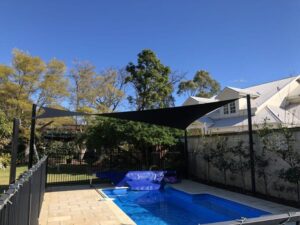

Walk into almost any aged care home on a warm Melbourne afternoon, and you will notice the same thing. The courtyard looks lovely from the window, yet nobody is sitting out there.
Strong UV, harsh glare off the concrete, and sudden rain showers keep residents indoors. Installing aged care shade sails solves this issue by turning exposed yards into places people can actually use.
Good shade for aged care and healthcare facilities is not just about making a garden look tidy. It is a practical safety upgrade that protects sensitive skin while keeping walkways clear for walkers and wheelchairs. If you plan to upgrade your grounds, explore our custom-engineered commercial shade sails in Melbourne to see how we design for care sites.
Care facilities face very different daily pressures compared to a normal backyard or café.
Resident Comfort, UV Protection and Vitamin D Balance
Older skin is thinner and burns much faster in Victorian summer sun.
- Commercial shade cloth blocks up to 98% of UV rays during the hottest part of the day.
- Residents still get fresh air and gentle daylight for Vitamin D without the risk of heat stress.
- Metal armrests and timber benches stay cool enough to sit on at 2:00 PM.
Glare Reduction and Dementia-Friendly Design
The Victorian Department of Health notes in its dementia-friendly design guidance that bright outdoor glare can confuse residents who have vision loss or memory issues.
- Overhead fabric softens harsh light bouncing off pale paving and concrete paths.
- Well-planned dementia-friendly outdoor spaces make garden paths easier to follow.
- Courtyards feel calmer and less disorienting when residents step outside.
Accessibility and Mobility-Friendly Circulation
Thoughtful aged care outdoor shade keeps everyday paths comfortable for residents and carers alike.
- Walkways stay cooler for people using wheelie walkers, wheelchairs, or scooters.
- Shaded doorways give older eyes a moment to adjust when moving from dim hallways into bright daylight.
Family Visits, Occupancy and Facility Reputation
Families notice straight away when an outdoor area feels cared for and comfortable.
- Visiting grandkids and relatives stay longer when there is a cool, sheltered spot to sit together.
- Neat healthcare shade structures reassure prospective families that your team cares about daily wellbeing.
- Just like our commercial shade projects in public and business spaces, the right cover turns dead space into a genuine community hub.
Types of Shade Sails Suited to Aged Care and Healthcare
You rarely see one single sail style used across an entire campus. Most sites mix two or three options depending on what happens in each area.
High-UV Breathable Shade Sails (HDPE)
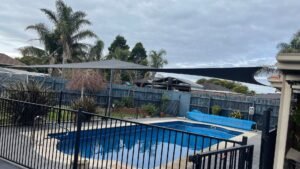
HDPE is a tough, knitted plastic fabric (high-density polyethylene) that lets trapped hot air rise straight through the weave.
- Best for open courtyards, sensory gardens, and sunny bowls greens.
- Keeps the air underneath noticeably cooler because breezes can still move through.
- Worth knowing: always ask for commercial-grade fabric with UV-stabilised thread so the seams hold up in gusty Melbourne winds.
Waterproof Shade Sails
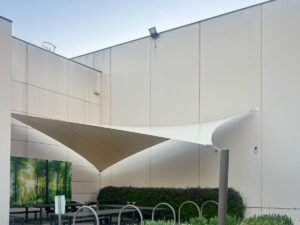
These use a coated membrane fabric that stops both sun and rain from getting through.
- Best for outdoor dining patios, walkways linking care wings, and ambulance or family drop-off zones.
- Lets residents sit outside for morning tea even when a light drizzle rolls in.
- Worth knowing: waterproof sails must be installed at a steeper angle so rainwater runs off cleanly instead of pooling in the middle. Explore our waterproof shade sails for all-weather courtyards if rain cover is a priority.
Custom Layered and Perimeter-Post Designs
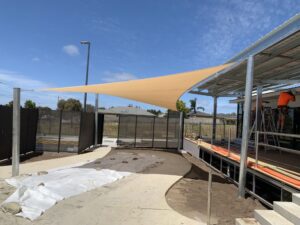
Perimeter posts are support poles placed around the outer edge of a courtyard rather than directly in the centre.
- Best for awkward courtyard shapes, narrow paths, and areas with lots of wheelchair movement.
- Keeps the central floor wide open with no poles to bump into.
- Worth knowing: overlapping two sails at different heights looks modern and helps block low, sideways afternoon sun.
Priority Zones: Where Shade Delivers the Highest Impact
If you are working to a set budget, rank your outdoor zones by how often residents actually use them.
Courtyards and Central Gathering Spaces
- Cover the main table clusters so morning tea and social chats can move outdoors.
- Shade flat grass or paved zones used for gentle group exercise or music sessions.
- Keep the middle of the courtyard open so staff can see everyone clearly.
Walking Loops and Shaded Rest Nodes
- Place small sails over benches spaced along garden paths so residents have a cool spot to catch their breath.
- Set every support pole well back from the path edge so nobody clips a post with a walker.
Memory Support and Therapeutic Sensory Gardens
- Shade raised garden beds so residents can pot plants or tend herbs without getting sunburnt.
- Create a couple of quiet, sheltered corners for calm one-on-one visits.
- Cut down bright reflections across textured garden paths.
Outdoor Dining and Family Visitor Patios
- Keep lunch tables cool during peak midday heat.
- Consider waterproof fabric here so a weekend family BBQ isn’t ruined by a sudden shower.
- Give visiting families a comfortable reason to spend time outside with their loved ones.
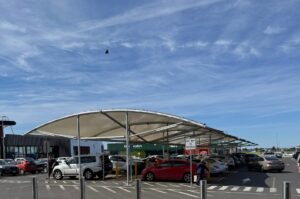
Entrances, Ambulant Drop-Offs and Car Park Transitions
- Shelter the main front bench where residents wait for community transport or family pick-up.
- Keep wheelchair loading zones dry during wet winter mornings.
Planning a courtyard refresh or campus upgrade? View our commercial shade sail solutions to talk through a layout built for your site.
Key Considerations When Specifying Aged Care Shade Sails
Treating shade like a proper building asset saves countless headaches down the track.
1) Usable Shade and Sun Angle Mapping
A west-facing courtyard might feel lovely at 9:30 AM, then turn into an oven by 2:30 PM.
- Map your shade around the exact hours residents go outside, not just midday.
- Remember that Melbourne’s sun sits much lower in autumn and winter than it does in January.
- We use the same practical sun-tracking approach we rely on when building heat-resilient outdoor spaces for local schools.
2) Mobility Clearances and Post Safety
A pole sitting slightly too close to a ramp or doorway quickly becomes a hazard.
- Leave generous turning room for wheelchairs and scooters along all main travel lanes.
- Keep sail heights high enough that the space feels open and airy.
- Fit soft, weatherproof foam post pads to any poles near busy paths or memory support units.
3) Staff Sightlines and Safe Supervision
Your nursing and lifestyle teams need to see what is happening outside without walking out every five minutes.
- Avoid low, heavy side drops that block the view from nurse stations or dining rooms.
- Check how the shade falls so nearby resident bedrooms don’t end up dark and gloomy.
4) Australian Engineering, Wind Loads and Victorian Council Permits
Commercial retirement village shade sails and nursing home shade sails have to meet strict safety rules.
- Melbourne cops strong northerly and southerly wind gusts, so footings and steel poles must be properly engineered.
- Larger commercial sails often need a Victorian building or planning permit before digging starts.
- Having certified engineering drawings on file makes safety and accreditation audits much easier.
5) Commercial-Grade Materials and Corrosion Resistance
Cheap hardware-store sails stretch, sag, and fray within a couple of summers.
- Ask for 316 marine-grade stainless steel cables, shackles, and turnbuckles so fittings don’t rust.
- Use PTFE (a tough synthetic fibre) thread in the seams so stitching doesn’t rot in the sun.
- Mid-tone or darker fabrics tend to hide leaf stains and dust far better than stark white.
New Builds vs. Retrofitting Active Healthcare Facilities
The job runs differently depending on whether you are building a brand-new home or upgrading a busy one.
New Aged Care Developments
- Concrete footings go in before the pavers and garden beds are laid, keeping everything neat.
- Poles are planned safely around underground stormwater, power, and irrigation lines from day one.
- Steel colours and fabric tones match the building’s exterior from opening day.
Retrofitting Active Campuses
- Work is done one courtyard at a time so residents always have another outdoor spot to use.
- Excavation holes, tools, and materials stay fenced off from all walking paths.
- Loud digging or drilling is scheduled outside resident rest hours, with a full sweep and tidy-up every afternoon.
Ongoing Maintenance, Audits and Lifecycle Planning
Tensioned fabric relaxes slightly over the years and takes a beating from Melbourne storms, so a little routine care goes a long way.
Routine Inspections and Audits
- Re-tensioning a loose sail stops it from flapping and tearing in high winds.
- Checking shackles, bolts, and pole bases catches early rust or movement before it becomes a safety issue.
- Booking scheduled shade sail audits and maintenance once a year gives you written records for your compliance files.
Smart Lifecycle Planning
- Good galvanised steel posts last for decades, meaning you can swap out worn fabric later without paying for a new frame.
- Sticking to one fabric range across your site makes future repairs much simpler.
- A gentle wash with water and mild soap keeps bird droppings and mould from staining the cloth.
FAQs
What is the best shade sail for an aged care courtyard?
Usually, a commercial-grade breathable HDPE sail is your best bet. It blocks up to 98% of UV rays while letting hot air escape out the top.
Are waterproof or breathable shade sails better for aged care facilities?
It depends on the spot. Breathable sails keep sunny garden and seating areas cooler, while waterproof sails are better over dining patios, walkways, and drop-off zones where you need rain cover.
Do aged care facilities in Melbourne need council permits for shade sails?
Often, yes. It depends on the sail’s size, height, and your local Victorian council’s rules. Proper engineering drawings make the permit side much smoother.
How do you install shade sails without disrupting residents?
We work in stages, fence off the work zone, and time noisy jobs like digging footings for quieter parts of the day. We pack everything away and clean up before we leave each afternoon.
How long do commercial aged care shade sails last?
Properly coated steel posts easily last 20 years or more. Commercial shade cloth generally lasts 10 to 15 years, depending on site exposure and whether it gets basic upkeep.
What details do you need to quote an aged care shade project?
A rough site plan or basic measurements, your Melbourne or Victorian suburb, the areas you want covered, and any known underground pipes are plenty to start with. From there, we come out on site to measure everything properly.
Creating Outdoor Spaces Residents Actually Use
Well-planned aged care shade sails Melbourne can do far more than block the sun. They turn empty courtyards into safe, welcoming spots where residents can walk, garden, and catch up with family.
When you focus on practical details—like glare control, wheelchair space, and simple upkeep—your outdoor areas stay useful for years.
Ready to plan safer outdoor spaces for your residents? Contact our Shade Sails specialist to book a free on-site measure and quote.